


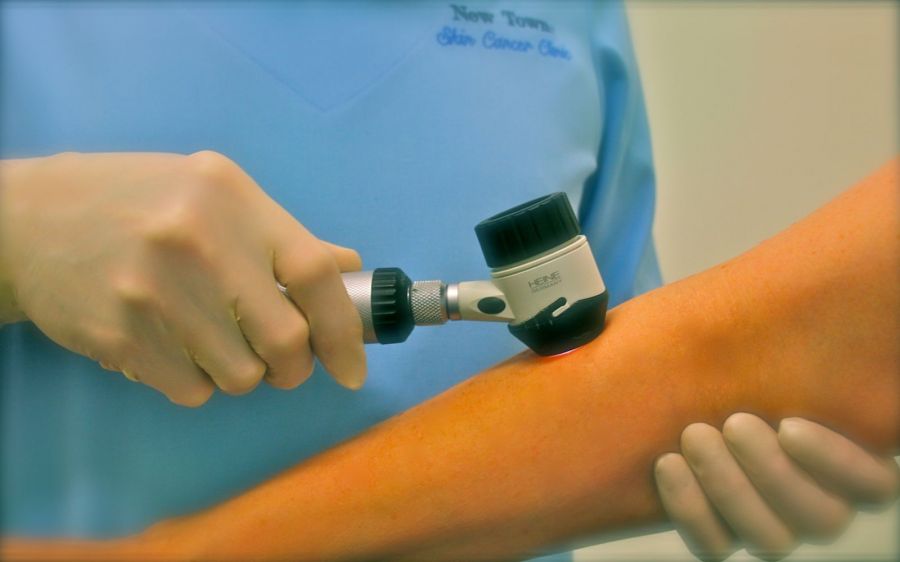
Skin cancer is the most frequent type of cancer worldwide with over one million cases diagnosed every year. It is a disease affecting men, women and children of any age or race and any part of the body, but usually appears on exposed skin areas (scalp, ears, face and hands).
If you were diagnosed with skin cancer or you have a suspicious skin lesion, a consultation with a plastic surgeon may help you understand the available therapeutic options. It’s only natural for you to be concerned that a surgical procedure may affect your physical appearance. The plastic surgeon can remove the neoplastic lesions using the right techniques to restore both your health and your physical aspect. Any surgery comes with a scar, but your surgeon will do everything possible to treat your skin cancer without damaging your appearance.
Before going to a doctor, make sure the one you have chosen is a board-certified plastic surgeon.
What is skin cancer?
The skin is the largest organ of the body, protecting all internal organs. Like every other organ the skin is composed by multiplying cells. Along this process the skin may develop lesions of various colours, forms and sizes. Many of these lesions, such as nevi (moles) are benign; they grow slowly and do not spread. When the cellular multiplying process is abnormal the result is a malignant lesion (skin cancer) that may spread to other areas of the body.
From the superficial skin layer, the epidermis, may develop squamous cell carcinomas (usually scaly lesions) and basal cell carcinomas (the most frequent type, with a round-pearly appearance). Melanoma is the most aggressive skin cancer. It presents as a black or brown lesion with irregular, ill-defined borders; it develops in the deepest portion of the epidermis, having the biggest tendency to spread throughout the body.
There are some others rare types of skin cancer.
In order to diagnose skin cancer and its type a tissue sample must be microscopically evaluated. According to size and location of the skin lesion, there are multiple ways to excise the skin cancer and to perform the subsequent reconstruction.
A small lesion may be removed by excision. This is a simple surgical procedure done by cutting away the suspicious lesion along with a border of normal skin. There are cases resembling with an iceberg: what we see is actually just a small part of the problem. In this situation your surgeon may request a “frozen section”. This means that the excised lesion is microscopically examined before closing the wound to make sure that every cancerous cell was removed. Once the skin cancer was removed the plastic surgeon’s goal is to close the skin in such manner that your appearance is minimally affected.
The excision of small cancerous lesions is usually closed by direct suture. Removing larger lesions leads to a bigger defect requiring reconstruction with a skin graft or a flap. If the post -excisional defect is very deep or has a large surface the local flaps are not suited and we have to use free tissue transfer. This is a microsurgical procedure allowing coverage of complex defects with skin, fat, muscle, sometimes bone and cartilage, taken away along with the nutrient blood vessels and connected to the local vascular network.
Where do I begin?
A consultation with a plastic surgeon is the first step to find out how a skin cancer can be surgically removed and if a reconstruction will be necessary. You will be fully informed about the different types of skin cancer, the therapeutic options according to your case and the expected results, including your physical appearance.
Evaluation
Your overall health will greatly influence the end result of the surgery. It is very important that you honestly share your expectations, use of medicines, alcohol, tobacco or recreational drugs.
Your case
The simple mentioning of the word “cancer” is hard to accept. Understanding that treating this cancer can get you scars or disfigurement is troublesome. Your surgeon understands your concern and will explain every therapeutic method and its effect on your appearance. In certain situations, the reconstruction may need multiple stages. All these may restore an almost natural aspect, but there is no such thing like the perfect reconstruction. There will be scars. Sometimes the reconstructed zones may differ in colour and texture comparing to unaffected areas. Although every effort will be made to get a result as natural as possible the most important thing is that the cancer is completely removed.
Preparing for surgery
The plastic surgeon will inform you about every aspect of the operation. You will be instructed about any necessary lab tests, any recommended medicines and the chosen type of anaesthesia.
You will be asked to sign an informed consent in order to assure your surgeon that you fully understand the procedure with all the possible risks and complications. Among possible risks we encounter infection or the development of fluid or blood collections underneath the skin. If a skin graft is used it is possible that your graft will not “take” and therefore additional surgery will be necessary to close the wound. There may be changes in skin colour, texture and local sensation.
Many times skin cancer surgery is done under local anaesthesia; some procedures require sedation or general anaesthesia.
What to expect?
Most skin cancer surgery is performed on an outpatient basis. If your surgery requires general anaesthesia or the lesion is a large one, hospitalization will be necessary for a few days.
After surgery
After completing the surgery, the incisions are covered with dressings.Sometimes drains are inserted to evacuate any fluid or blood collections underneath the skin.
At discharge, you will be instructed about any local wound care, necessary medication to help the healing process or to reduce the risk of infection and also about follow-up visits.
The healing process
In the first days following surgery you will feel some swelling and discomfort at the incisions. These can be controlled with medication.A return to light activities is possible a few days after surgery. If non-absorbable sutures were used, they have to be removed at 10-14 days. Any local numbness will resolve in time. In certain cases additional procedures are necessary to complete or refine the reconstruction.
A particular attention must be given to sun protection for life. Sun exposure may lead to pigmentation anomalies; new skin lesions may appear in the same place or on another region of your body.
Results
The plastic surgeon will help you heal by excising the skin cancer and performing the reconstruction as natural as it can be. Simple excision may cure you; there are cancer types necessitating additional radiotherapy or chemotherapy. It is important to follow all the treatment recommendations.
Once you were diagnosed with skin cancer you have a greater risk of developing a new skin cancer. Skin cancer may reoccur. It is important to self-examine your skin periodically to detect and follow any suspicious lesion. Use sun blockers and try to give up smoking.
Your surgeon, your choice
The decision to have excisional and reconstructive surgery is important, as well as choosing the right surgeon. Not all the doctors performing these procedures are plastic surgeons. Make sure your doctor is a board- certified plastic surgeon, member of the Romanian Plastic Surgeons Association.
No Comments